
Effective local SEO delivers measurable business growth by focusing on the signals that search engines and users trust. This means a technically sound website, a perfectly optimised Google Business Profile, and content that directly answers local customers' questions. For businesses in competitive markets like Toronto, investing in local SEO optimization is not a nice-to-have — it is the foundation of sustainable growth.
Many business owners have been disappointed by agencies delivering confusing reports filled with meaningless data. True local SEO is transparent: a clear strategy that connects specific actions to business outcomes — phone calls, direction requests, and service bookings. The goal is not just to appear on a map but to become the trusted, clear choice for customers in your area.
The Foundation: Verifiable Business Signals vs. Vague Promises
A successful local SEO campaign is built on accurate and consistent business information — the most fundamental element search engines use to verify your business's existence, location, and legitimacy. The core of this foundation is your NAP-W consistency: Name, Address, Phone Number, and Website. This data must be identical across all major online directories and platforms. Inconsistencies such as using "St." on one platform and "Street" on another directly dilute your authority and harm your local visibility.
of Canada's mobile OS market is Apple — making Apple Maps a non-negotiable citation platform alongside Google Business Profile
StatCounter Canada, 2026
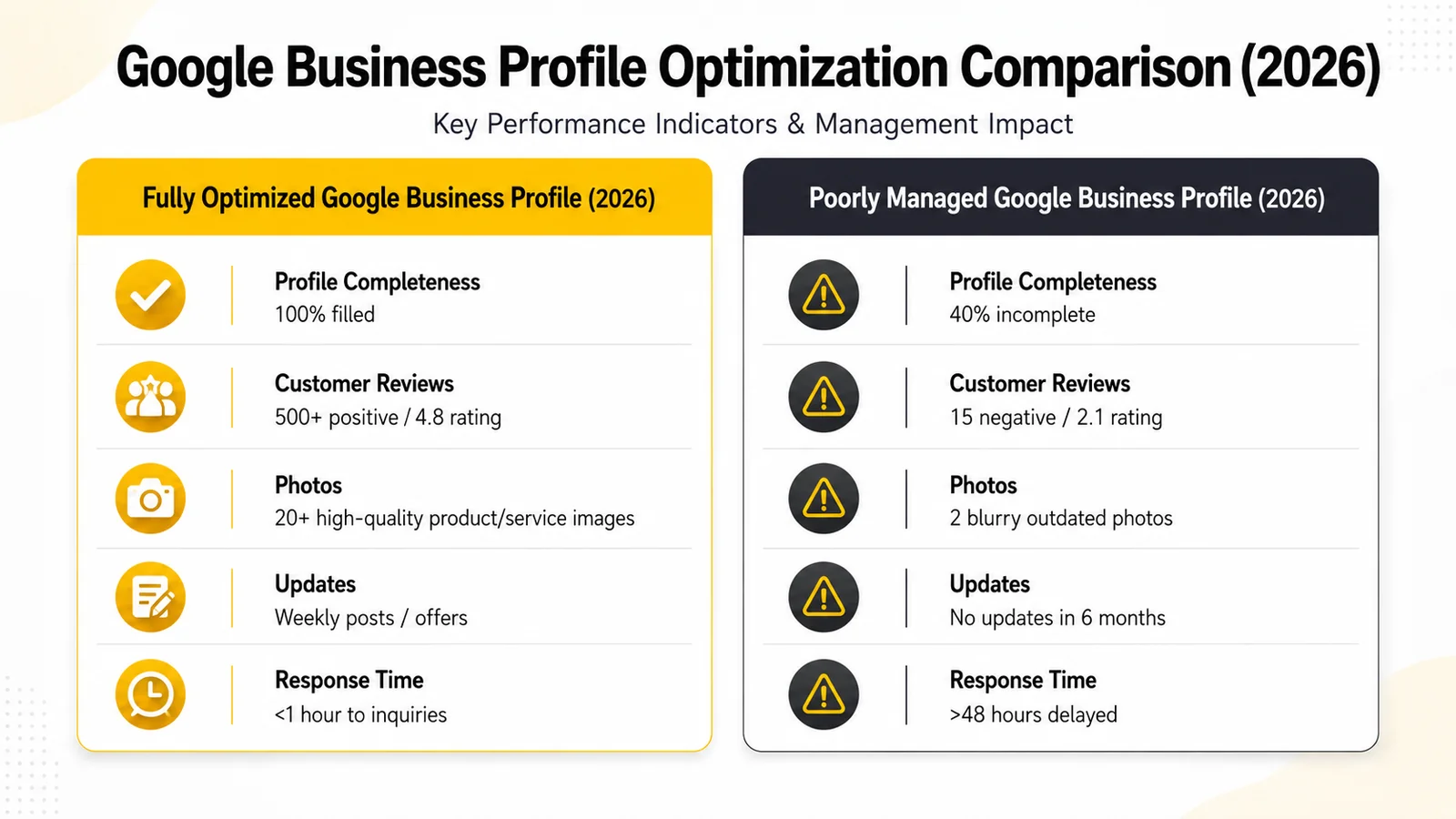
Beyond citations, the technical implementation of LocalBusiness schema on your website communicates your NAP-W, business hours, and geo-coordinates directly to search engine crawlers. An effective strategy then layers on a fully built-out Google Business Profile with regular activity: posts, Q&A responses, and photo uploads. An agency that does not discuss or implement schema markup is not performing modern, effective local SEO. The combination of clean citations, an active GBP, and correct schema creates a trustworthy foundation that algorithms reward.
Content & On-Page SEO: Hyper-Local Relevance in an AI World
In 2026, generic content with a city name inserted is useless. Effective local SEO content strategy is about demonstrating deep, authentic expertise within your specific service area. This means creating content that answers the precise questions your customers in Richmond Hill, Toronto, or Markham are actually asking — shifting from broad head keywords to high-intent, long-tail queries that signal a user is ready to make a decision. Targeting a term like "emergency roof repair cost in Vaughan" will attract more qualified leads than a generic term like "roofing company."
This hyper-local approach must be reflected in your website's structure. Instead of a single service page, a successful strategy involves creating unique, detailed pages for each core service in each primary location. Each page should feature unique copy, locally-relevant testimonials, project photos from that area, and mentions of local landmarks — establishing strong geographic signals for both users and search engines.
- Focus: Effective content answers specific local user queries (e.g., "emergency plumber cost in Markham"). Red flag: broad keywords with only a city name added.
- Pages: Unique, detailed service pages for each core location. Red flag: thin, duplicated pages with only the city name changed.
- Media: Custom photos and videos of the team, location, and local projects. Red flag: stock photos or no media at all.
- Proof: Geo-tagged testimonials, local case studies, and mentions of local landmarks. Red flag: generic testimonials with no local context.
- AI Optimisation: Content structured for AI Overviews and conversational search. Red flag: keyword-stuffed content that does not answer questions directly.
Optimising for AI-powered search, such as Google's AI Overviews, requires a further evolution in content structure. Using clear headings, FAQ sections, and data-driven statements positions your website as the source of truth that AI models cite. A modern AI SEO strategy anticipates conversational queries and creates content that satisfies user intent completely — the difference between being cited in an AI answer and being invisible.
The Technical Backbone: Website Performance and Local Schema
Your website is the hub of all your digital marketing efforts. In 2026, website performance is not an optional extra — it is a primary ranking factor. Google's Core Web Vitals — Largest Contentful Paint (LCP), Interaction to Next Paint (INP), and Cumulative Layout Shift (CLS) — are direct measures of user experience. A website that fails these metrics will struggle to rank, regardless of how strong its content is. A competent local SEO provider must have in-house web development capabilities or work closely with a developer who understands these requirements.
potential drop in conversion rates from a 1-second delay in mobile page load time — performance is a revenue issue, not just a technical one
Google Performance Research, 2026
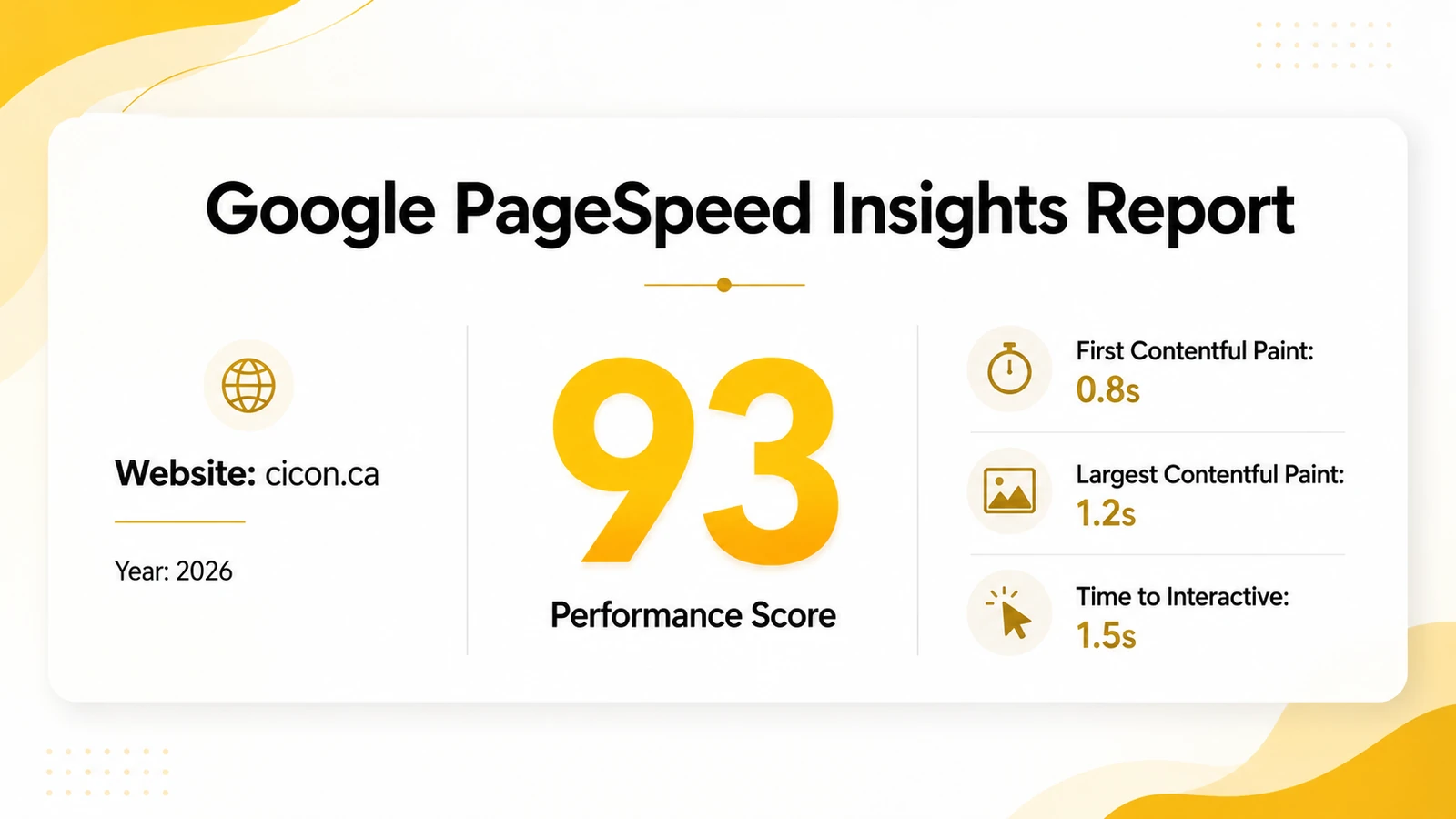
Beyond speed, the correct implementation of structured data goes deeper than LocalBusiness schema alone. This can include schema for FAQPage, Review, Service, and Article — giving search engines rich context about your content. Marking up customer reviews with schema can enable star ratings to appear directly in search results, significantly increasing click-through rates. A clean, logical URL structure further reinforces geographic relevance and makes your business the most authoritative result for a local search query.
Off-Page Authority: Building Trust with Quality Links
Off-page SEO is one of the most misunderstood and abused areas of the industry. A common red flag is an agency offering to build hundreds of links for a low, fixed price — these are almost always algorithmically generated links from spammy directories or private blog networks that can result in a Google penalty. In 2026, effective local link building is about quality, not quantity. A single, editorially given link from a respected local source is exponentially more valuable than hundreds of junk links.
True local authority is built by earning links from within your community's digital ecosystem — being featured in a local news outlet like the Toronto Star, listed as a partner on a local Business Improvement Area website, or providing original research that others want to cite. A strong content marketing program creates the link-worthy assets — detailed guides, local market data, and original research — that generate high-authority links organically. This process cannot be automated; it requires manual outreach and genuine relationship building.
Reporting & KPIs: Measuring What Actually Matters
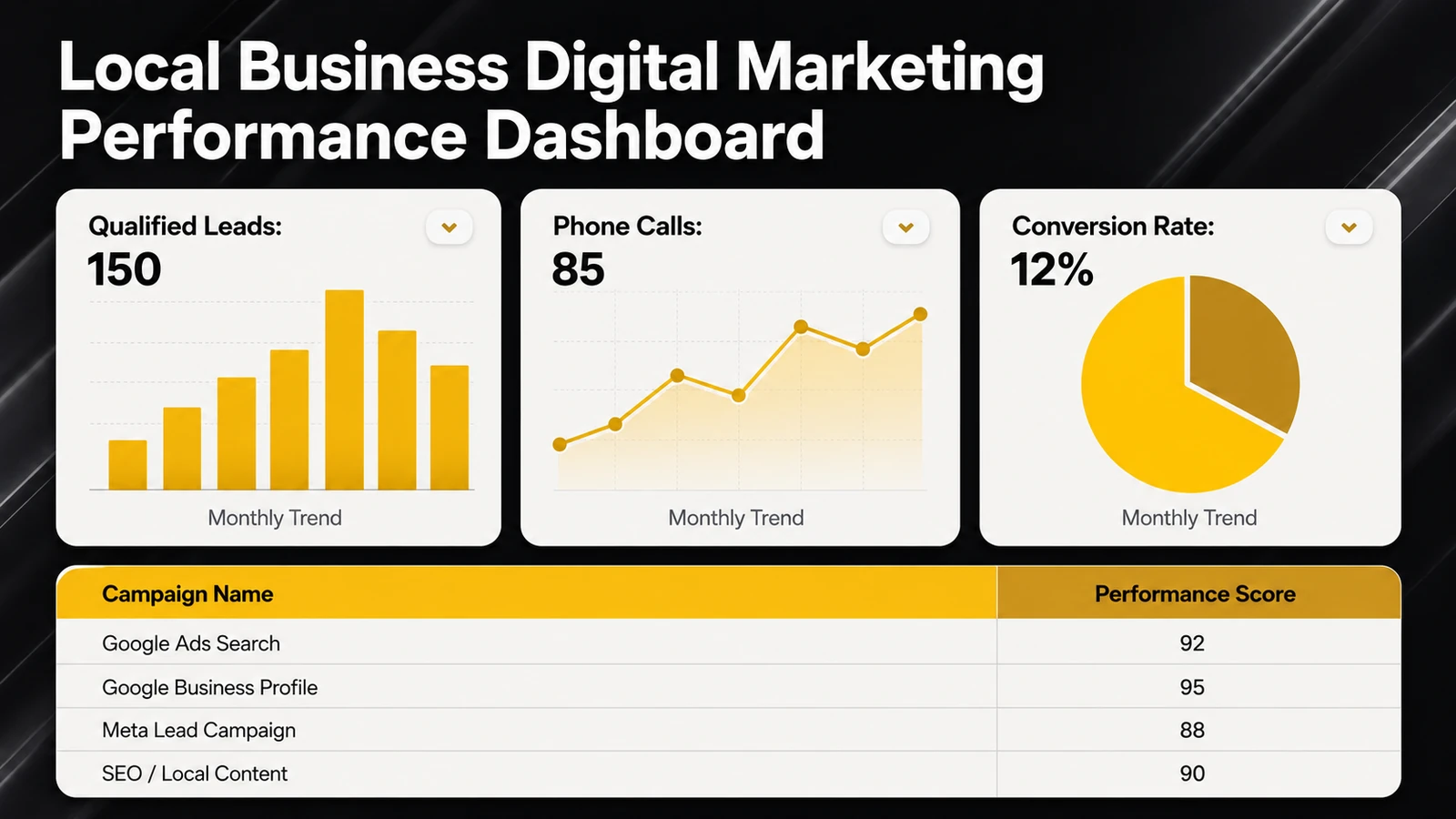
This is where many agencies fail their clients. A red flag report is filled with vanity metrics: impressions, clicks, and broad keyword rankings that do not measure business success. A 50% increase in website traffic is meaningless if none of those visitors become customers. A #1 ranking for a keyword no one searches is equally worthless. In 2026, legitimate SEO reporting focuses exclusively on KPIs directly tied to your revenue goals.
- Qualified phone calls: Measured using call tracking software to attribute calls directly to SEO efforts.
- Form submissions: Tracking contact, quote, or appointment booking forms completed by local visitors.
- GBP actions: Monitoring clicks on the call button, direction requests, and clicks to your website from the Google Business Profile listing.
- High-intent keyword rankings: Tracking visibility for search terms that indicate a user is ready to buy (e.g., "24-hour plumber near me").
- Map pack visibility: Measuring how often you appear in the coveted local map results for your most important services.
Final Recommendation
For a small or medium-sized business in the Greater Toronto Area, investing in local SEO is not optional — it is essential for survival and growth. However, the investment must be made with a partner who operates with transparency and focuses on measurable business outcomes. Do not accept vague promises, vanity metrics, or guaranteed rankings. These are hallmarks of an ineffective agency. The most effective approach is to partner with a boutique agency that provides senior-level strategy on every account, ensuring the person developing your strategy is an experienced professional.
CiCon Marketing works with GTA businesses ready to build real local authority. Our approach integrates technical SEO, hyper-local content production, meticulous Google Business Profile management, and high-quality link building — all tied to KPI-driven reports that connect directly to your bottom line. If your current or potential agency cannot clearly explain their process in these terms, they are not the right partner.